
Dr. Abhishek Saxena
Published on April 16, 2026
Calcium and Vitamin D Deficiency – Causes, Health Problems & Prevention
The Silent Epidemic: Calcium and Vitamin D Deficiency
Calcium and Vitamin D work together as a vital duo for bone health, muscle function, and immunity. Unfortunately, deficiencies are common — especially in people with limited sun exposure, poor diet, or digestive disorders. When both are low, the body faces serious health consequences beyond just weak bones.
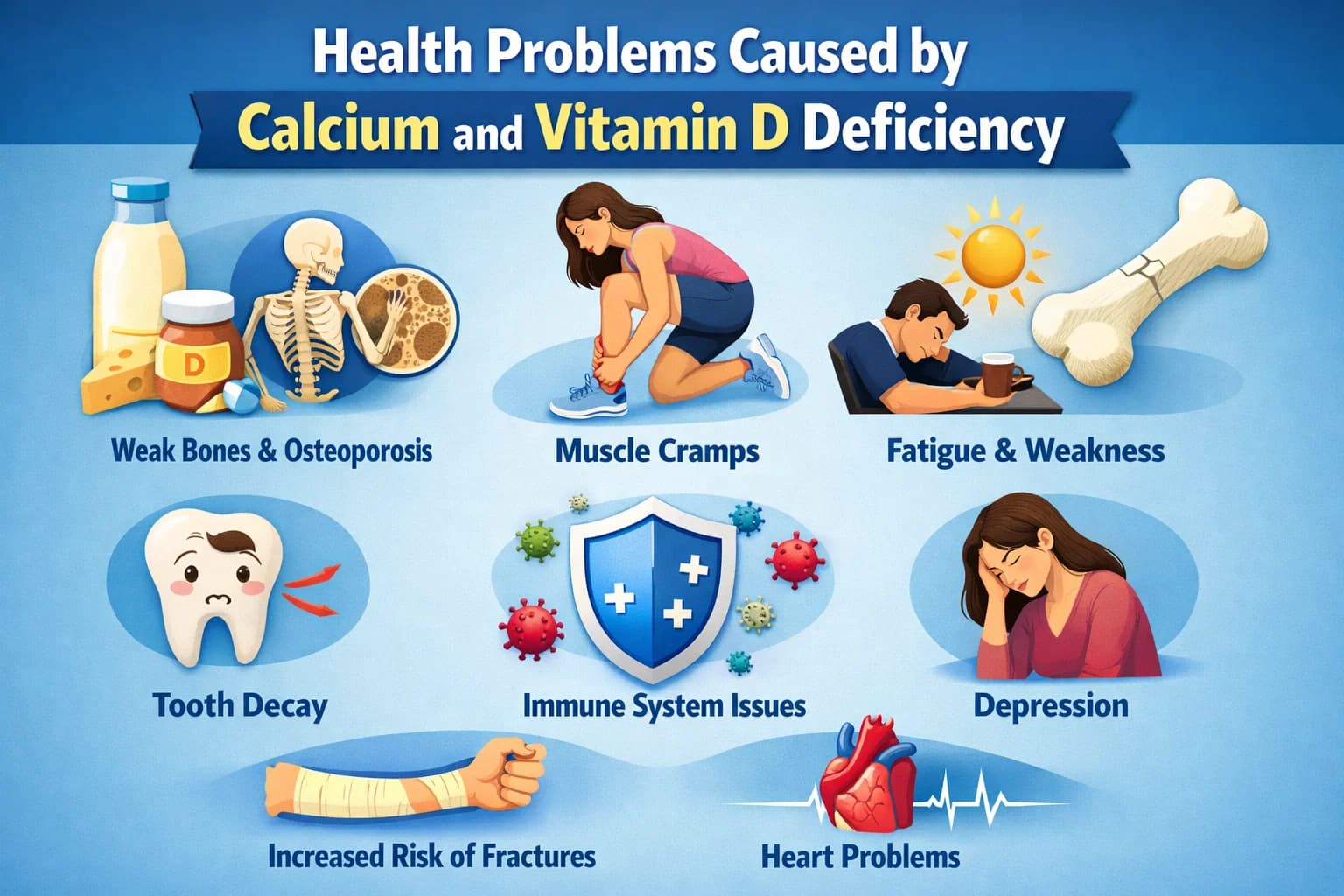
Common Health Problems Caused by Deficiency
1. Osteoporosis (Brittle Bones)
Long-term deficiency forces the body to pull calcium from bones, making them porous and fracture-prone. Hip, wrist, and spine fractures occur even with minor falls.
2. Rickets in Children
Vitamin D deficiency causes soft, weak bones in children, leading to bowed legs, stunted growth, and skeletal deformities.
3. Osteomalacia in Adults
This is the adult version of rickets. Bones become soft, causing deep bone pain, muscle weakness, and a waddling gait.
4. Muscle Cramps and Spasms
Low calcium affects nerve excitability, resulting in leg cramps, facial twitching, and tingling fingers (paresthesia). Severe cases can cause tetany — painful, continuous muscle contractions.
5. Dental Problems
Calcium leached from the jawbone leads to loose teeth, gum disease (periodontitis), and increased cavities. Vitamin D also helps fight oral bacteria.
6. Chronic Fatigue and Brain Fog
Vitamin D receptors in the brain regulate energy and sleep. Deficiency often mimics depression or chronic fatigue — causing daytime sleepiness, poor memory, and low motivation.
7. Heart Rhythm Issues
Low calcium (hypocalcemia) can trigger arrhythmias (irregular heartbeat) and even heart failure. Vitamin D deficiency is also linked to high blood pressure.
8. Weakened Immunity
Vitamin D modulates immune response. Low levels increase risk of pneumonia, frequent colds, flu, and possibly autoimmune diseases like multiple sclerosis.
Who is at Highest Risk?
- Elderly people (reduced skin synthesis)
- Office workers with little sun exposure
- People with dark skin (melamin blocks UVB)
- Vegans and lactose-intolerant individuals
- Patients with Crohn’s, celiac, or gastric bypass
- Pregnant and breastfeeding women
Symptoms to Watch For
- Bone pain (especially lower back and legs)
- Frequent muscle cramps
- Fatigue and low mood
- Hair loss and brittle nails
- Poor wound healing
- Getting sick often
Prevention Tips
- ✓ Get 10–30 minutes of midday sunlight daily
- ✓ Eat calcium-rich foods: dairy, leafy greens, almonds, sardines
- ✓ Consume Vitamin D sources: fatty fish (salmon, mackerel), egg yolks, fortified milk
- ✓ Take supplements if deficient (consult your doctor first)
- ✓ Pair calcium with Vitamin D for better absorption
- ✓ Test your 25-hydroxyvitamin D levels annually
Best Dietary Sources
Calcium-rich foods
Milk, yogurt, cheese, tofu, ragi (finger millet), sesame seeds, amaranth, broccoli.
Vitamin D-rich foods
Salmon, tuna, mackerel, cod liver oil, egg yolk, UV-exposed mushrooms, fortified cereals.
When to See an Orthopedic Doctor
- Unexplained bone pain or fractures
- Severe muscle weakness or walking difficulty
- Persistent back pain not relieved by rest
- Loss of height or stooped posture
- Children with delayed walking or bowed legs
Early diagnosis with a simple blood test can prevent irreversible bone damage.
Conclusion
Calcium and Vitamin D deficiency is a silent but serious health problem. It affects bones, muscles, heart, teeth, and immunity. Fortunately, it is preventable with sun exposure, a balanced diet, and appropriate supplements. If you have risk factors or persistent symptoms, consult an orthopedic doctor for proper evaluation.
Strong bones and a healthy body start with the right nutrients today.
📞 Call: +91 86182 43967
🌐 Visit: boneandjoints.in
