
Dr. Abhishek Saxena
Published on July 27, 2026
Common Sports Injuries and Their Treatment | Causes, Symptoms & Recovery
Common Sports Injuries and Their Treatment
Staying physically active through sports and exercise is one of the best ways to maintain good health. Whether you are a professional athlete, a weekend fitness enthusiast, or someone who enjoys recreational sports, physical activity strengthens muscles, improves cardiovascular health, and boosts overall well-being. However, sports also come with the risk of injuries. From minor sprains to serious ligament tears, sports injuries can affect anyone regardless of age or fitness level.
While some injuries heal with rest and proper care, others require medical treatment, physiotherapy, or even surgery. Early diagnosis and appropriate treatment not only speed up recovery but also reduce the risk of long-term complications and repeated injuries.
This blog explores the most common sports injuries, their causes, symptoms, treatment options, and preventive measures.
What Are Sports Injuries?
Sports injuries are injuries that occur during physical activity, exercise, or athletic participation. They may result from sudden trauma, overuse, poor training techniques, inadequate warm-up, improper equipment, or accidents during sports.
Sports injuries are generally classified into two categories:
Acute Injuries: These occur suddenly due to a fall, collision, twist, or direct impact.
Chronic Injuries: These develop gradually because of repetitive stress or overuse of muscles, joints, or tendons over time.
Understanding the type of injury helps doctors determine the most effective treatment plan.
Common Causes of Sports Injuries
Several factors contribute to sports-related injuries, including:
- Inadequate warm-up before exercise
- Poor physical conditioning
- Overtraining
- Incorrect exercise techniques
- Sudden increase in workout intensity
- Muscle weakness
- Lack of flexibility
- Improper footwear or sports equipment
- Contact during sports
- Previous untreated injuries
Identifying these risk factors can help prevent future injuries.
1. Sprains
A sprain occurs when ligaments, the strong tissues connecting bones, are stretched or torn. Ankles, knees, and wrists are the most commonly affected joints.
Symptoms
- Sudden pain
- Swelling
- Bruising
- Difficulty moving the joint
- Joint instability
Treatment
Mild sprains usually respond well to the RICE method:
- Rest
- Ice application
- Compression bandage
- Elevation
Doctors may also recommend pain-relieving medications, physiotherapy, or supportive braces. Severe ligament tears may require surgical repair.
2. Strains
Strains involve stretching or tearing of muscles or tendons. They commonly affect the hamstrings, lower back, shoulders, and calf muscles.
Symptoms
- Muscle pain
- Swelling
- Muscle weakness
- Difficulty moving the affected muscle
- Muscle spasms
Treatment
Treatment includes rest, cold therapy during the first 48 hours, gradual stretching exercises, physiotherapy, and strengthening programs. Severe muscle tears may occasionally require surgery.
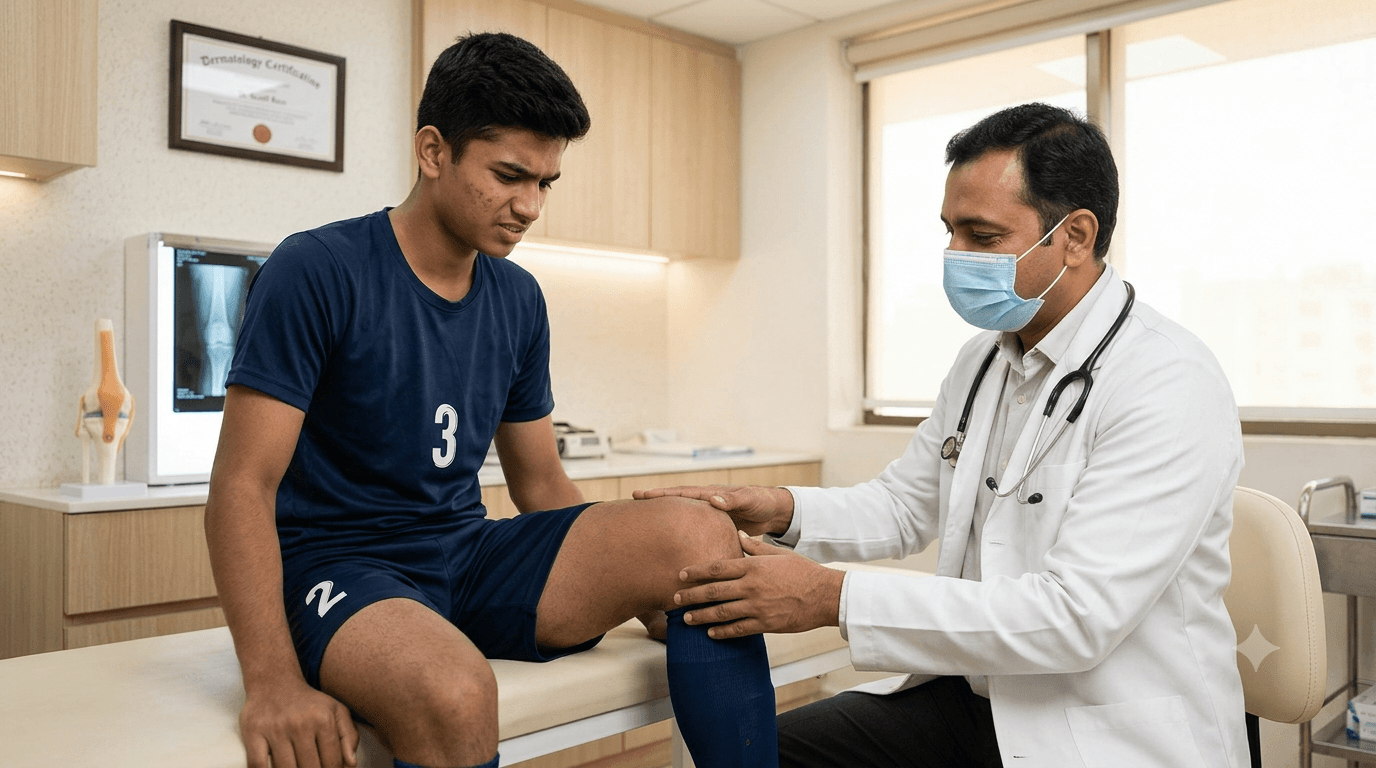
3. Knee Injuries
The knee is one of the most commonly injured joints in sports. Athletes involved in football, basketball, cricket, tennis, and running are particularly at risk.
Common knee injuries include:
- ACL tears
- Meniscus tears
- MCL injuries
- Patellar tendon injuries
Symptoms
- Severe knee pain
- Swelling
- Popping sensation
- Instability
- Difficulty walking
Treatment
Depending on the severity, treatment may involve physiotherapy, knee braces, anti-inflammatory medications, or arthroscopic surgery followed by rehabilitation.
4. Tennis Elbow
Despite its name, tennis elbow affects many people who repeatedly use their forearm muscles, including golfers, painters, mechanics, and office workers.
Symptoms
- Pain on the outside of the elbow
- Weak grip strength
- Pain while lifting objects
- Tenderness around the elbow
Treatment
Treatment includes activity modification, physiotherapy, anti-inflammatory medications, elbow braces, stretching exercises, and in persistent cases, injections or minimally invasive procedures.
5. Shoulder Injuries
Shoulder injuries are common among swimmers, cricketers, volleyball players, baseball players, and weightlifters.
Common conditions include:
- Rotator cuff injuries
- Shoulder impingement
- Shoulder dislocation
- Labral tears
Symptoms
- Shoulder pain
- Weakness
- Limited range of motion
- Clicking sensation
- Difficulty lifting the arm
Treatment
Treatment depends on the injury and may include physiotherapy, medications, rehabilitation exercises, or surgery for severe tears.
6. Stress Fractures
Stress fractures are tiny cracks in bones caused by repetitive force rather than a single injury. They frequently affect runners, dancers, and athletes involved in high-impact sports.
Symptoms
- Localized pain
- Swelling
- Pain during activity
- Pain that improves with rest
Treatment
Rest from high-impact activities is essential. Doctors may recommend protective footwear, braces, physiotherapy, and a gradual return to sports once healing is complete.
7. Shin Splints
Shin splints cause pain along the inner edge of the shinbone and commonly affect runners and athletes who suddenly increase training intensity.
Symptoms
- Pain along the shin
- Tenderness
- Mild swelling
- Pain during running
Treatment
Rest, ice packs, stretching exercises, proper footwear, and gradual training progression usually provide relief.
8. Achilles Tendon Injuries
The Achilles tendon connects the calf muscles to the heel bone. It is vulnerable to inflammation and rupture during jumping, sprinting, and sudden direction changes.
Symptoms
- Heel pain
- Swelling
- Stiffness
- Difficulty walking
- Sudden snapping sensation in complete rupture
Treatment
Treatment ranges from physiotherapy and supportive braces to surgical repair in complete tendon ruptures.
9. Dislocations
A joint dislocation occurs when bones are forced out of their normal position. The shoulder, fingers, elbows, and kneecap are frequently affected.
Symptoms
- Visible deformity
- Severe pain
- Swelling
- Inability to move the joint
Treatment
A healthcare professional should reposition the joint. Immobilization, physiotherapy, and rehabilitation help restore normal function.
10. Concussions
A concussion is a mild traumatic brain injury caused by a blow to the head during contact sports.
Symptoms
- Headache
- Dizziness
- Confusion
- Nausea
- Memory problems
- Sensitivity to light
Treatment
Physical and mental rest are essential. Athletes should never return to play until medically cleared, as repeated concussions can have serious long-term consequences.
Diagnosis of Sports Injuries
A sports medicine specialist or orthopedic doctor may use the following methods to diagnose injuries:
- Physical examination
- Medical history
- X-rays
- MRI scan
- CT scan
- Ultrasound imaging
Accurate diagnosis helps determine the best treatment approach.
Rehabilitation and Physiotherapy
Rehabilitation is a crucial part of recovery after a sports injury. A structured physiotherapy program helps:
- Restore flexibility
- Improve muscle strength
- Enhance balance
- Reduce pain
- Prevent future injuries
- Safely return to sports
Skipping rehabilitation can increase the risk of reinjury.
Preventing Sports Injuries
Many sports injuries can be prevented by following simple precautions:
- Warm up before every workout.
- Cool down after exercise.
- Stretch regularly to improve flexibility.
- Wear appropriate footwear and protective equipment.
- Increase training intensity gradually.
- Stay hydrated.
- Avoid overtraining.
- Maintain proper technique during sports.
- Include strength and balance exercises in your fitness routine.
- Listen to your body and rest when needed.
Prevention is always better than treatment, especially for athletes who want to maintain long-term performance.
When Should You See a Doctor?
Seek medical attention if you experience:
- Severe pain
- Inability to bear weight
- Joint deformity
- Persistent swelling
- Limited movement
- Numbness
- Recurrent injuries
- Symptoms that do not improve after a few days of home care
Early medical evaluation often leads to faster recovery and better outcomes.
Conclusion
Sports injuries are common but should never be ignored. From sprains and strains to ligament tears and stress fractures, prompt diagnosis and appropriate treatment are essential for a full recovery. Modern sports medicine combines medical care, physiotherapy, rehabilitation, and preventive strategies to help athletes and active individuals return to their favorite activities safely.
If you experience persistent pain, swelling, or difficulty moving after a sports injury, consult an orthopedic or sports medicine specialist. Timely treatment not only relieves pain but also restores strength, mobility, and confidence, allowing you to get back to an active lifestyle while minimizing the risk of future injuries.
