
Dr. Abhishek Saxena
Published on August 12, 2026
Knee Popping Sound: When to See a Doctor | Causes, Symptoms & Treatment
Knee Popping Sound: When to See a Doctor
Have you ever heard a clicking, popping, or cracking sound from your knee while walking, climbing stairs, standing up, or exercising? If yes, you are not alone. Knee sounds are quite common, and in many cases, they are not a sign of a serious problem.
However, when clicking is accompanied by pain, swelling, stiffness, or difficulty moving the knee, it should not be ignored. Understanding why your knee is making these sounds can help you know when you need medical attention.
What Causes Knee Clicking?
There can be several reasons behind clicking or popping sounds in the knee. Some are harmless, while others may be related to an injury or joint condition.
1. Gas Bubbles in the Joint
Sometimes, small gas bubbles form inside the fluid surrounding the knee joint. When these bubbles move or collapse, they can create a popping or clicking sound.
This is usually harmless if there is no pain or swelling.
2. Ligament or Tendon Movement
Ligaments and tendons move around the bones when you bend or straighten your knee. Occasionally, they can shift slightly and produce a clicking or snapping sound.
This can happen more often after physical activity or repetitive movements.
3. Cartilage Problems
Cartilage helps the bones in your knee move smoothly. When cartilage becomes damaged or starts wearing down, you may notice grinding, clicking, or cracking sounds.
This may occur with conditions such as arthritis or cartilage injuries.
4. Meniscus Injury
The meniscus is a soft piece of cartilage that works like a cushion inside the knee. A tear in the meniscus can sometimes cause clicking, catching, or locking of the knee.
Pain and swelling may also develop after an injury.
5. Ligament Injuries
Sports injuries can damage knee ligaments such as the ACL, PCL, MCL, or LCL. Along with pain and swelling, some people may feel a popping sensation at the time of injury or notice unusual movement in the knee.
Such symptoms should be evaluated by an orthopedic specialist.
Is Knee Clicking Always Serious?
No. Knee clicking by itself does not always mean that something is wrong.
If your knee clicks occasionally but you have:
- No pain
- No swelling
- Normal movement
- No feeling of instability
then it may not require treatment.
But if the clicking continues or comes with other symptoms, it is better to get the knee examined rather than guessing the cause.
When Should You See an Orthopedic Doctor?
You should consider consulting an orthopedic doctor if knee clicking is accompanied by:
- Persistent knee pain
- Swelling around the joint
- Knee stiffness
- Difficulty walking or climbing stairs
- A feeling that the knee is giving way
- Knee locking or getting stuck
- Pain after a sports injury
- Difficulty fully bending or straightening the knee
Early evaluation can help identify the problem and prevent it from becoming more difficult to manage.
How Is the Cause of Knee Clicking Diagnosed?
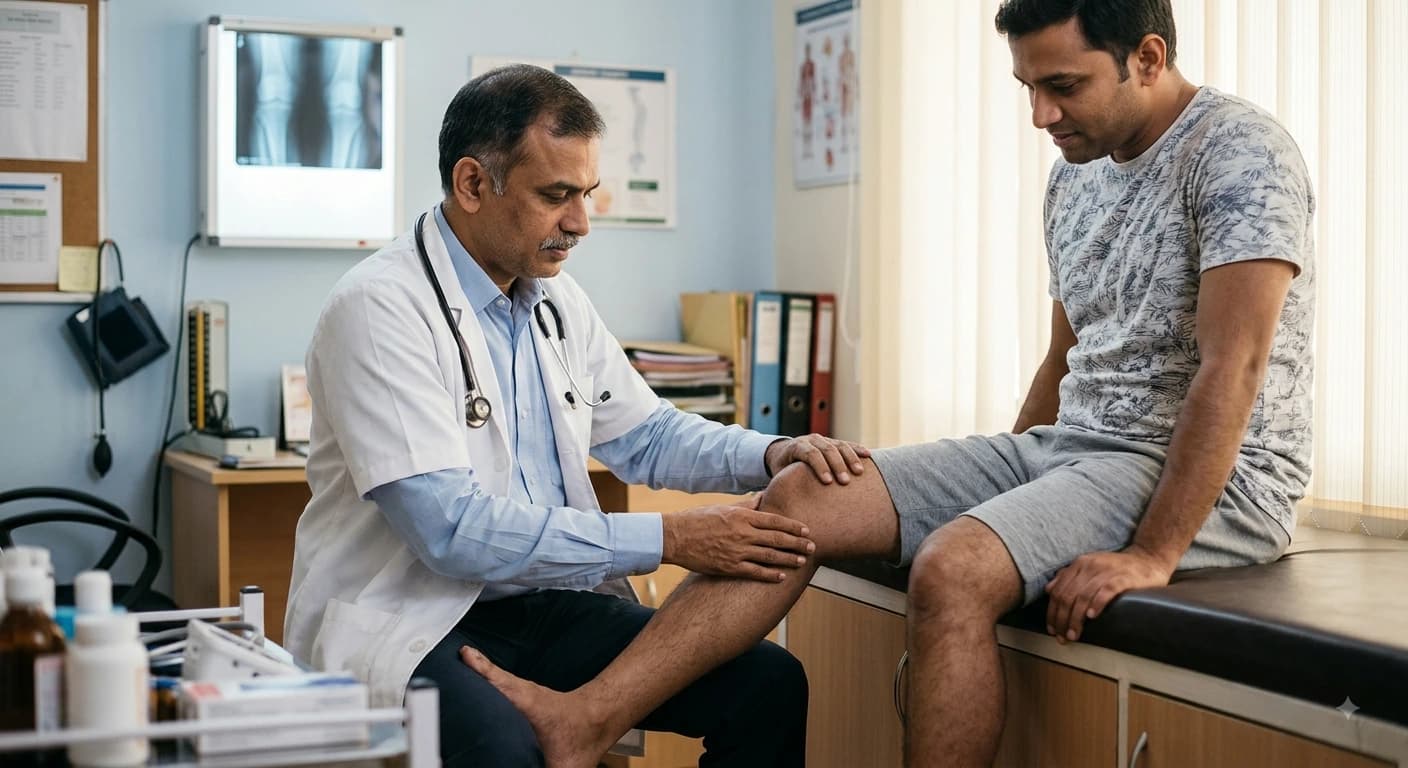
An orthopedic specialist will first understand your symptoms and examine your knee. They may ask about previous injuries, sports activities, pain, swelling, and your daily movements.
Depending on the symptoms, imaging tests such as an X-ray or MRI may be recommended to understand the condition of the bones, cartilage, ligaments, or meniscus.
The treatment depends on the actual cause rather than the clicking sound alone.
Treatment for Knee Clicking
Treatment can vary from person to person. Mild problems may improve with simple measures such as rest, activity modification, strengthening exercises, and physiotherapy.
If there is a significant ligament, meniscus, cartilage, or other structural problem, additional treatment may be needed. In selected cases, minimally invasive procedures such as knee arthroscopy may be considered.
The right treatment should always be decided after a proper examination.
How Can You Keep Your Knees Healthy?
You can take several simple steps to protect your knees:
- Maintain a healthy body weight.
- Strengthen the muscles around your knees.
- Warm up before exercising.
- Use proper technique during workouts.
- Avoid suddenly increasing your exercise intensity.
- Wear suitable footwear.
- Give your body enough time to recover after intense activity.
- Do not ignore repeated knee pain.
Strong muscles and good movement habits can help reduce unnecessary stress on your knee joints.
Final Thoughts
A clicking knee is not always a reason to panic. In many people, it can happen without causing any damage. But when clicking comes with pain, swelling, locking, instability, or an injury, it is worth getting checked.
If your knee symptoms are affecting your daily activities, an orthopedic consultation can help identify the actual cause and guide you toward the right treatment.
For expert evaluation of knee injuries and other orthopedic problems in Ajmer, you can consult Dr. Abhishek Saxena, who specializes in knee, shoulder, sports injuries, arthroscopy, joint replacement, and orthopedic care. The clinic also provides personalized recovery and rehabilitation support.
Frequently Asked Questions (FAQs)
1. Is knee clicking normal?
Knee clicking can be normal when it occurs without pain, swelling, stiffness, or movement problems. However, painful or persistent clicking should be evaluated by an orthopedic specialist.
2. Why does my knee click when I bend it?
The sound may come from movement of tendons or ligaments, changes inside the joint, cartilage problems, or other causes. The exact reason depends on your symptoms and examination.
3. Can knee clicking be caused by an old injury?
Yes. Previous ligament, meniscus, cartilage, or other knee injuries can sometimes lead to clicking or unusual sensations during movement.
4. Does knee clicking mean I need surgery?
Not necessarily. Many knee problems can be managed without surgery through physiotherapy, exercise, activity modification, medicines, or other treatments. Surgery is considered only when medically appropriate.
5. Can exercise make knee clicking worse?
Certain exercises or incorrect techniques may increase stress on the knee. If clicking is accompanied by pain or swelling during exercise, stop the activity and consult a specialist.
6. When should I worry about a clicking knee?
You should seek medical advice if clicking occurs with significant pain, swelling, locking, instability, difficulty walking, or follows a serious injury.
7. Can physiotherapy help with knee problems?
Yes. Depending on the cause, physiotherapy can help improve muscle strength, flexibility, movement, and overall knee function. A physiotherapist can recommend exercises based on your condition.
8. Which doctor should I consult for persistent knee clicking?
An orthopedic doctor or orthopedic surgeon can evaluate persistent knee clicking, especially when it is associated with pain, injury, swelling, or difficulty moving the joint.
