
Dr. Abhishek Saxena
Published on September 11, 2026
Minimally Invasive Procedures: A Modern Approach to Orthopedic Care
Minimally Invasive Procedures: A Modern Approach to Orthopedic Care
When you have ongoing joint pain, an injury, or difficulty moving normally, surgery may sometimes become part of the treatment plan. But today, orthopedic care has changed significantly. Many conditions can be treated using minimally invasive procedures, which are designed to achieve the required treatment through smaller incisions and specialized instruments.
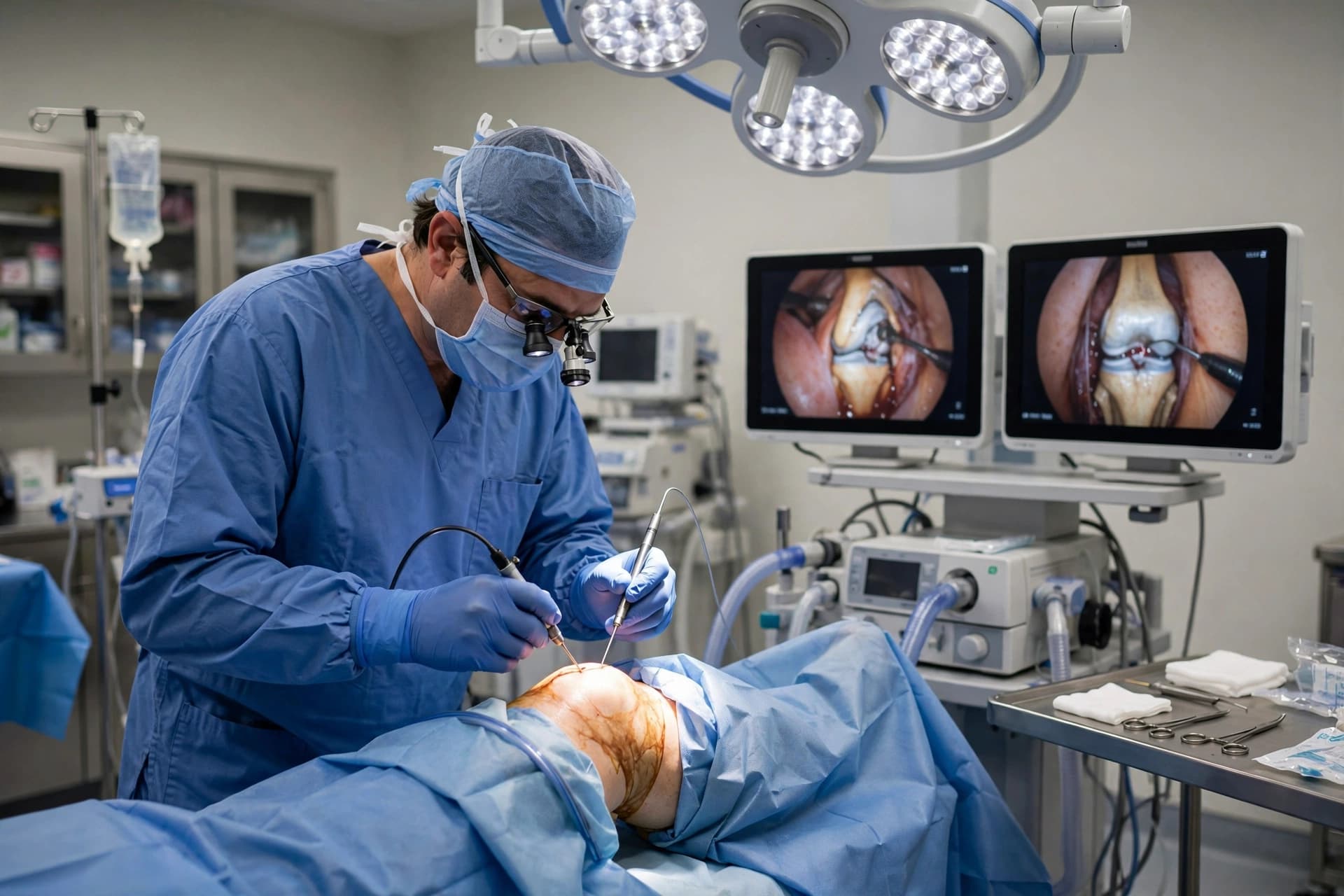
These procedures can be useful for selected knee, shoulder, and other joint problems. One common example is arthroscopy, where a small camera and surgical instruments are inserted through tiny openings to examine and treat problems inside a joint. Arthroscopy can be used for conditions such as meniscus injuries, ligament or tendon problems, damaged cartilage, and inflammation inside a joint.
What Are Minimally Invasive Procedures?
Minimally invasive orthopedic procedures use smaller cuts and specialized equipment instead of the larger incision sometimes required in traditional open surgery.
The exact technique depends on the patient's condition, age, activity level, and overall health. Your orthopedic surgeon first evaluates the problem and then decides whether a minimally invasive approach is appropriate.
For example, arthroscopy is commonly used for certain knee and shoulder conditions. A small camera, called an arthroscope, helps the surgeon see inside the joint and guide the procedure.
Common Orthopedic Procedures
Some minimally invasive techniques are used for:
- Knee arthroscopy
- Shoulder arthroscopy
- Treatment of selected meniscus injuries
- Certain ligament and tendon injuries
- Treatment of some cartilage problems
- Removal of loose fragments inside a joint
- Selected sports injuries
Not every injury requires surgery. In many cases, physiotherapy, medicines, activity modification, or other non-surgical treatments may be considered first.
Benefits of Minimally Invasive Surgery
One of the main advantages is that the procedure can often be performed through smaller incisions. Depending on the surgery and the patient's condition, this may mean less damage to surrounding tissues and a more comfortable recovery.
Possible benefits can include:
- Smaller surgical incisions
- Less post-operative discomfort in some cases
- Reduced soft-tissue damage
- Earlier movement when medically appropriate
- Faster return to daily activities for some patients
- Smaller scars compared with traditional open surgery
However, recovery is different for every person. The type of procedure, severity of the injury, general health, and rehabilitation plan all influence recovery time.
Why Proper Diagnosis Matters
Minimally invasive surgery is not automatically the best option for every patient.
Before recommending a procedure, an orthopedic specialist may review your symptoms, perform a physical examination, and recommend imaging such as an X-ray or MRI when required. In some cases, arthroscopy may also help confirm a diagnosis when other tests do not provide a clear answer.
This is why treatment should always be based on the individual's actual condition rather than simply choosing the newest procedure.
Recovery After the Procedure
Recovery depends on the type of surgery performed. Some patients may return to normal activities relatively quickly, while others need a longer period of rehabilitation.
Following your surgeon's instructions is important. Physiotherapy may be recommended to improve strength, flexibility, balance, and joint movement. Gradually returning to normal activity can help protect the treated area and support recovery.
When Should You See an Orthopedic Specialist?
Consider consulting an orthopedic specialist if you have:
- Persistent joint pain
- Repeated swelling
- Difficulty moving a joint
- A sports-related injury
- Knee or shoulder instability
- Pain that continues despite rest or basic treatment
- Difficulty performing normal daily activities
Early evaluation can help identify the actual cause of the problem and allow an appropriate treatment plan to be discussed.
Frequently Asked Questions (FAQs)
1. What is a minimally invasive orthopedic procedure?
It is a surgical technique that generally uses smaller incisions and specialized instruments to diagnose or treat certain orthopedic conditions.
2. Is arthroscopy a minimally invasive procedure?
Yes. Arthroscopy is a commonly used minimally invasive technique in which a small camera and instruments are inserted into a joint through small openings.
3. Which joints can be treated with arthroscopy?
Arthroscopy is commonly used for problems involving joints such as the knee and shoulder. The suitability of the procedure depends on the specific condition.
4. Does minimally invasive surgery mean no pain?
No surgery is completely pain-free. However, minimally invasive techniques may reduce tissue disruption and post-operative discomfort in suitable cases.
5. How long does recovery take?
Recovery varies depending on the procedure, the condition being treated, and the patient's health. Your surgeon and physiotherapy team can provide a more specific recovery plan.
6. Is minimally invasive surgery suitable for everyone?
No. Some conditions are better treated with other approaches. An orthopedic specialist should evaluate the injury or joint problem before deciding on the treatment.
7. Can I return to sports after minimally invasive surgery?
Many patients can return to sports after appropriate treatment and rehabilitation, but the timing depends on the injury and procedure. Returning too early can increase the risk of further injury.
Final Thoughts
Minimally invasive procedures have become an important part of modern orthopedic care. For the right patient, they can provide an effective way to diagnose or treat certain joint problems while using smaller surgical openings.
The most important step is not simply choosing a minimally invasive procedure, but choosing the right treatment for your specific condition. A consultation with an experienced orthopedic specialist can help you understand your options and make an informed decision.
This blog is for general educational purposes only and should not replace an examination or medical advice from a qualified healthcare professional.
Dr. Abhishek Saxena is a Senior Consultant Orthopedic Surgeon specializing in shoulder, knee, hand and wrist, sports injuries, joint replacement, arthroscopy, and fracture care, with over 10 years of experience and more than 500 successful surgeries. For orthopedic consultation, visit Bone and Joints Clinic, Near Jeevan Jyoti Hospital, Lajpat Nagar, Ramganj, Ajmer, Rajasthan 305001, or call +91 86182 43967.
