
Dr. Abhishek Saxena
Published on August 19, 2026
Back Pain That Won't Go Away? 7 Signs You Should See an Orthopaedic Doctor
Back Pain That Won't Go Away? 7 Signs You Should See an Orthopaedic Doctor
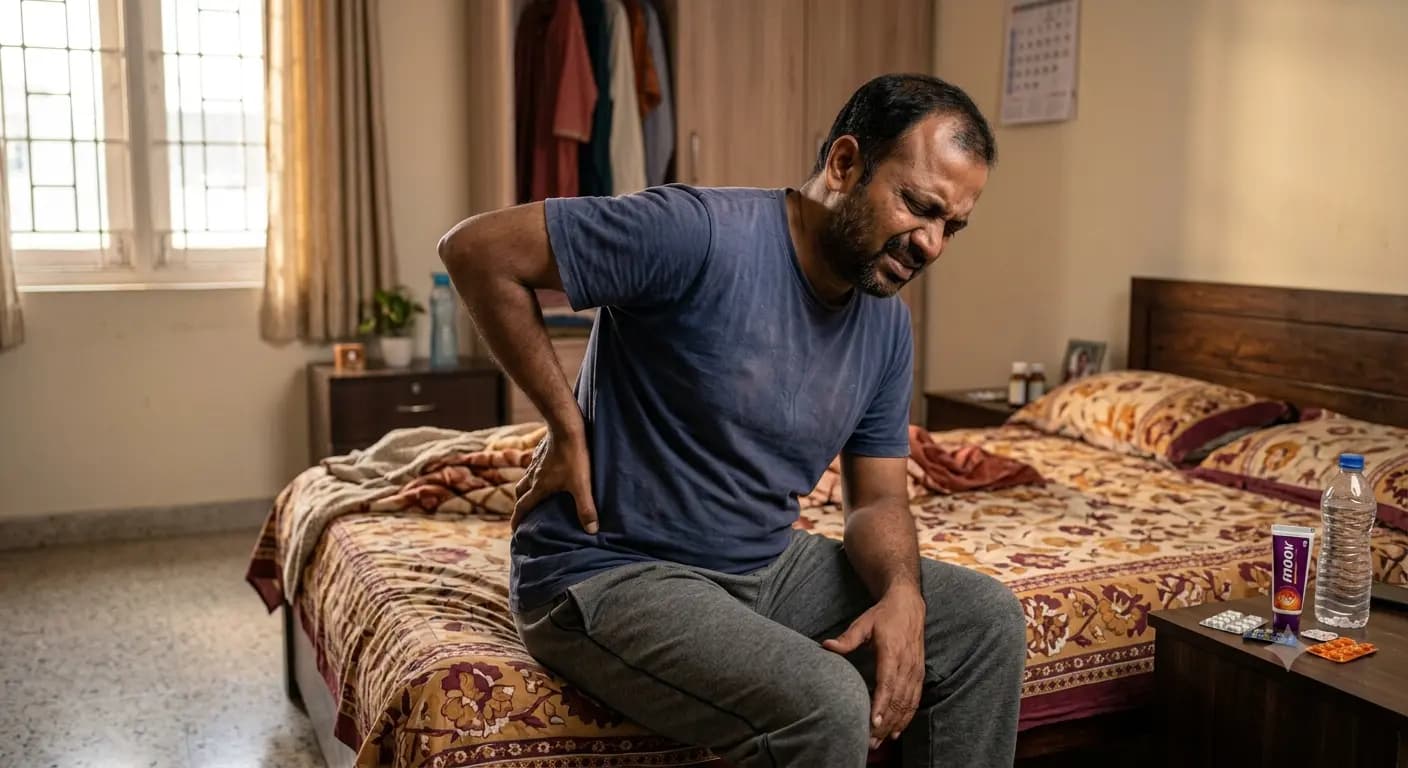
Back pain is common and can happen because of poor posture, long hours of sitting, lifting something heavy, exercise, or muscle strain. In many cases, it improves with rest and basic care.
However, persistent back pain should not always be ignored. When the pain keeps returning or is accompanied by other symptoms, it may indicate an underlying spine or nerve problem.
Here are seven signs that it may be time to consult an orthopaedic doctor.
1. Your Back Pain Keeps Coming Back
If your lower back pain improves temporarily but returns again and again, there may be an underlying cause that needs attention. Repeated pain can sometimes be associated with disc problems, muscle weakness, poor posture or changes in the spine.
2. Pain Travels Down Your Leg
Back pain that spreads into your buttock, thigh or leg may be a sign of sciatica or nerve irritation. You may experience shooting, burning or sharp pain that travels down the leg.
If this pain continues or becomes worse, it is worth getting evaluated.
3. You Have Numbness or Tingling
Numbness, tingling or a pins-and-needles sensation in your legs or feet can sometimes occur when a nerve is compressed or irritated.
When these symptoms occur along with back pain, they should not be ignored.
4. You Notice Weakness in Your Legs
Difficulty walking, climbing stairs or standing for long periods because your legs feel weak may indicate more than simple muscle soreness.
Leg weakness associated with back pain can sometimes point towards nerve involvement and requires proper medical evaluation.
5. Back Pain Is Affecting Your Daily Life
If your pain is making it difficult to sleep, work, walk, exercise or perform everyday activities, it may be time to seek professional advice.
Persistent pain should not become something you simply learn to live with.
6. The Pain Started After an Injury
Back pain following a fall, accident, sports injury or heavy impact needs particular attention. An injury can sometimes cause a disc problem, fracture or other damage that may not be immediately obvious.
Getting checked after a significant injury can help identify the problem and guide appropriate treatment.
7. You Have Other Unusual Symptoms
Certain symptoms alongside back pain require prompt medical attention. These can include:
- Sudden or increasing weakness in the legs
- Difficulty walking or maintaining balance
- Fever along with back pain
- Unexplained weight loss
- Loss of bladder or bowel control
If you experience loss of bladder or bowel control along with severe back pain or leg weakness, seek urgent medical care.
When Should You See an Orthopaedic Doctor?
Not every episode of back pain requires medical treatment. But if the pain is persistent, keeps returning, affects your daily activities, or is accompanied by numbness, weakness or leg pain, it is better to get it evaluated.
Depending on the cause, back pain treatment may include medicines, physiotherapy, exercises, posture correction and lifestyle changes. Surgery is not required for every back problem and is considered only when medically necessary.
Don't Ignore Persistent Back Pain
Back pain may seem like a minor problem at first, but continuing to ignore it can affect your mobility and quality of life. Understanding the possible warning signs can help you know when professional advice is needed.
If you are experiencing ongoing back pain, sciatica, slipped disc symptoms or other spine-related problems, consulting an experienced orthopaedic specialist such as Dr. Abhishek Saxena in Ajmer can help with proper evaluation and treatment guidance.
Frequently Asked Questions
1. When should I see a doctor for back pain?
You should consider seeing a doctor if your back pain continues for several weeks, keeps returning, becomes worse, or starts affecting your daily activities.
2. Is lower back pain always serious?
No. Many cases of lower back pain are caused by muscle strain, poor posture or overuse and improve with proper care. However, persistent or severe pain should be evaluated.
3. Can a slipped disc cause back pain?
Yes. A slipped or herniated disc can cause back pain and may also irritate nearby nerves, resulting in pain, numbness or tingling that travels into the leg.
4. Why does back pain travel down my leg?
Pain travelling from the lower back into the buttock or leg can occur because of irritation or compression of a spinal nerve. Sciatica is one common cause.
5. Can poor posture cause back pain?
Yes. Sitting for long periods or maintaining poor posture can place additional stress on the muscles and spine and contribute to back pain.
6. Does every back pain problem require an MRI?
No. An MRI is not necessary for every case of back pain. A doctor may recommend imaging depending on your symptoms, examination and medical history.
7. Does back pain always require surgery?
No. Many back problems can be managed with non-surgical treatment, including physiotherapy, exercises, medicines and lifestyle changes. Surgery is considered only when medically appropriate.
8. Can exercise help with back pain?
The right exercises can improve strength, flexibility and support for the spine. However, exercises should be selected according to the cause and severity of the pain.
9. Why should persistent back pain not be ignored?
Recurring or worsening pain may sometimes indicate an underlying disc, nerve, joint or spinal problem. Getting an early evaluation can help identify the cause and determine suitable treatment.
10. Who should I consult for persistent back pain in Ajmer?
People experiencing persistent back pain or other orthopaedic concerns in Ajmer can consult an experienced orthopaedic specialist such as Dr. Abhishek Saxena for proper evaluation and treatment advice.
