
Dr. Abhishek Saxena
Published on February 24, 2026
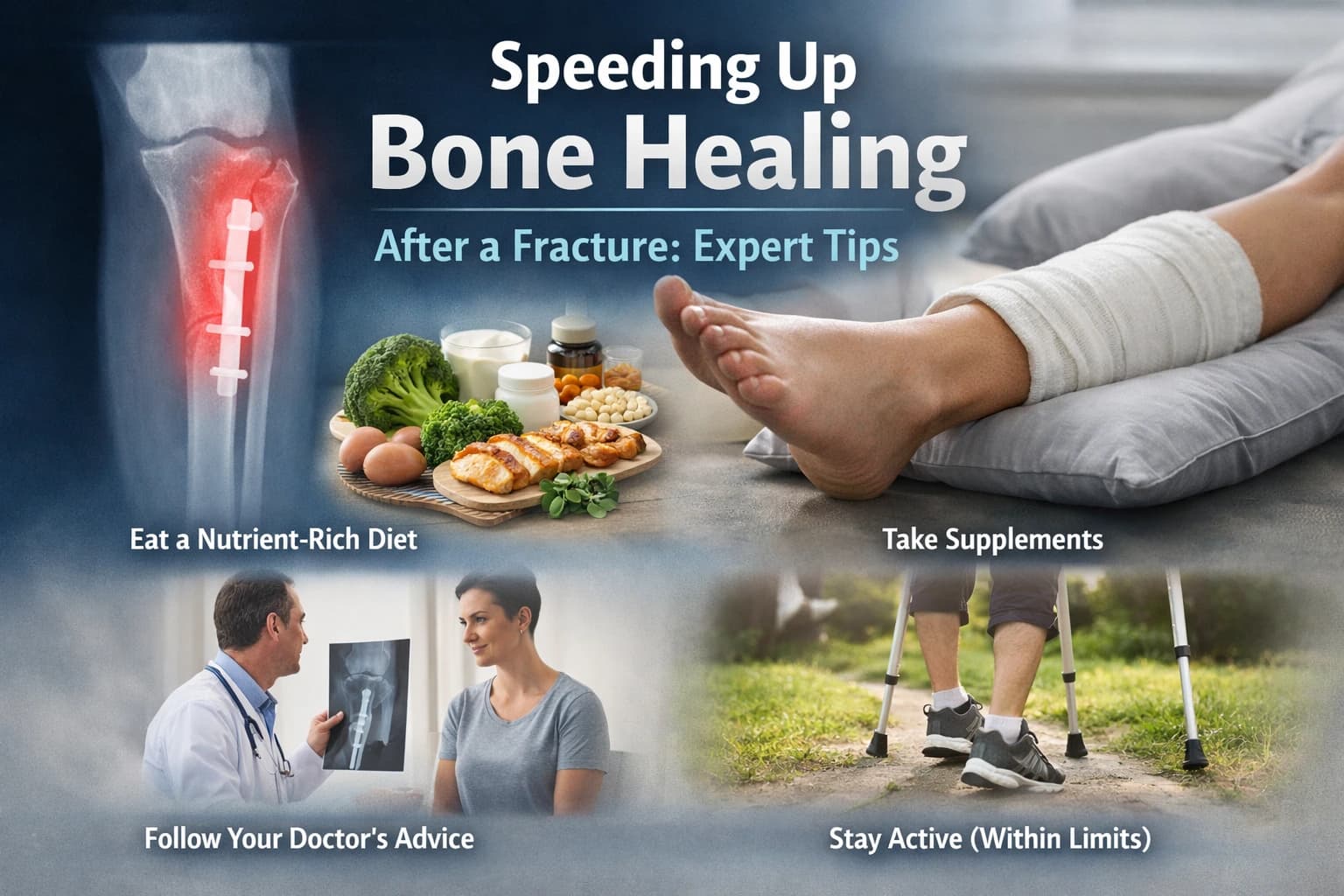
Accelerating Recovery: Expert Tips for Speeding Up Bone Healing After a Fracture
A bone fracture can be painful, stressful, and disruptive to daily life. Whether it’s caused by a fall, accident, sports injury, or osteoporosis, proper care and guided recovery are essential for healing. The good news? With the right approach, you can significantly improve and even accelerate the bone healing process.
As an orthopedic specialist, I often guide patients on how to heal faster and regain mobility safely. In this blog, I’ll share expert tips to help speed up bone healing after a fracture.
Understanding the Bone Healing Process
Before learning how to speed up recovery, it’s important to understand how bones naturally heal. Bone healing occurs in three main stages:
- Inflammatory Phase (First Few Days): After a fracture, the body forms a blood clot around the break. This protects the area and begins the healing response.
- Reparative Phase (2–6 Weeks): Soft callus forms and gradually hardens into new bone.
- Remodeling Phase (Several Months): The bone reshapes and strengthens over time, restoring its original structure.
While healing is natural, certain habits and medical support can significantly enhance the speed and quality of recovery.
1. Follow Proper Immobilization
One of the most critical steps is keeping the fractured bone properly aligned and immobilized. This may involve:
- Cast or splint
- Brace
- Surgical fixation (plates, rods, or screws)
Avoid removing your cast or putting pressure on the injured area without medical advice. Even small movements can delay healing.
2. Eat a Bone-Boosting Diet
Nutrition plays a powerful role in recovery. To speed up bone healing, focus on:
🥛 Calcium-Rich Foods
- Milk, curd, paneer
- Almonds
- Leafy greens
☀ Vitamin D
- Morning sunlight
- Egg yolks
- Fortified foods
🥩 Protein
Protein helps rebuild tissues and support callus formation.
- Dal, beans
- Chicken, fish
- Soy products
🥕 Vitamin C & K
These help in collagen formation and bone strength.
- Citrus fruits
- Spinach
- Broccoli
Avoid junk food, excess sugar, and carbonated drinks as they may slow healing.
3. Stay Hydrated
Water supports cellular repair and circulation. Proper hydration ensures nutrients reach the fracture site efficiently. Aim for at least 2–3 liters of water daily unless otherwise advised.
4. Avoid Smoking and Alcohol
Smoking reduces blood supply to bones and significantly delays healing. Alcohol interferes with calcium absorption and weakens bone formation. If you want faster recovery, avoiding these is essential.
5. Take Prescribed Supplements
In some cases, additional supplements may be recommended, such as:
- Calcium tablets
- Vitamin D3
- Collagen supplements
Always consult your orthopedic doctor before starting supplements.
6. Start Physiotherapy at the Right Time
Once the bone begins healing, controlled physiotherapy helps:
- Restore joint movement
- Prevent stiffness
- Improve blood circulation
- Strengthen surrounding muscles
Never rush exercises on your own. Guided physiotherapy ensures safe and faster functional recovery.
7. Get Adequate Rest and Sleep
Your body repairs itself during sleep. Lack of sleep can slow tissue regeneration. Aim for 7–8 hours of quality sleep daily.
Keep the injured limb elevated when advised to reduce swelling and improve blood flow.
8. Manage Medical Conditions
Certain health issues can delay bone healing, such as:
- Diabetes
- Osteoporosis
- Thyroid disorders
If you have any underlying conditions, ensure they are well-controlled during recovery.
9. Regular Follow-Ups and X-rays
Periodic check-ups help monitor bone healing progress. Follow your doctor’s schedule for X-rays to confirm that the fracture is uniting properly.
Ignoring follow-ups can lead to complications like delayed union or non-union of bones.
10. Maintain a Positive Mindset
Recovery from a fracture requires patience. Stress and anxiety can negatively affect healing hormones. Stay positive, follow medical guidance, and focus on gradual improvement.
When to Consult an Orthopedic Specialist?
Seek immediate medical attention if you notice:
- Increasing pain or swelling
- Numbness or tingling
- Fever
- Cast becoming too tight or loose
Timely intervention prevents complications and ensures smooth recovery.
Final Thoughts
Bone fractures can feel overwhelming, but with proper care, nutrition, medical supervision, and lifestyle changes, healing can be significantly accelerated. The key lies in consistency, discipline, and expert guidance.
