
Dr. Abhishek Saxena
Published on January 24, 2026
What Is Slip Disc? Symptoms, Causes, and Treatment
What Is Slip Disc? Symptoms, Causes, and Treatment | Dr. Abhishek Saxena
As a leading orthopedic doctor in Ajmer, I frequently encounter patients worried about a 'slip disc.' While the name suggests a disc has slid out of place, it actually refers to a herniation or bulge that can cause significant discomfort. Understanding the symptoms and causes is the first step toward effective treatment and regaining your mobility.
What is a Slip Disc?
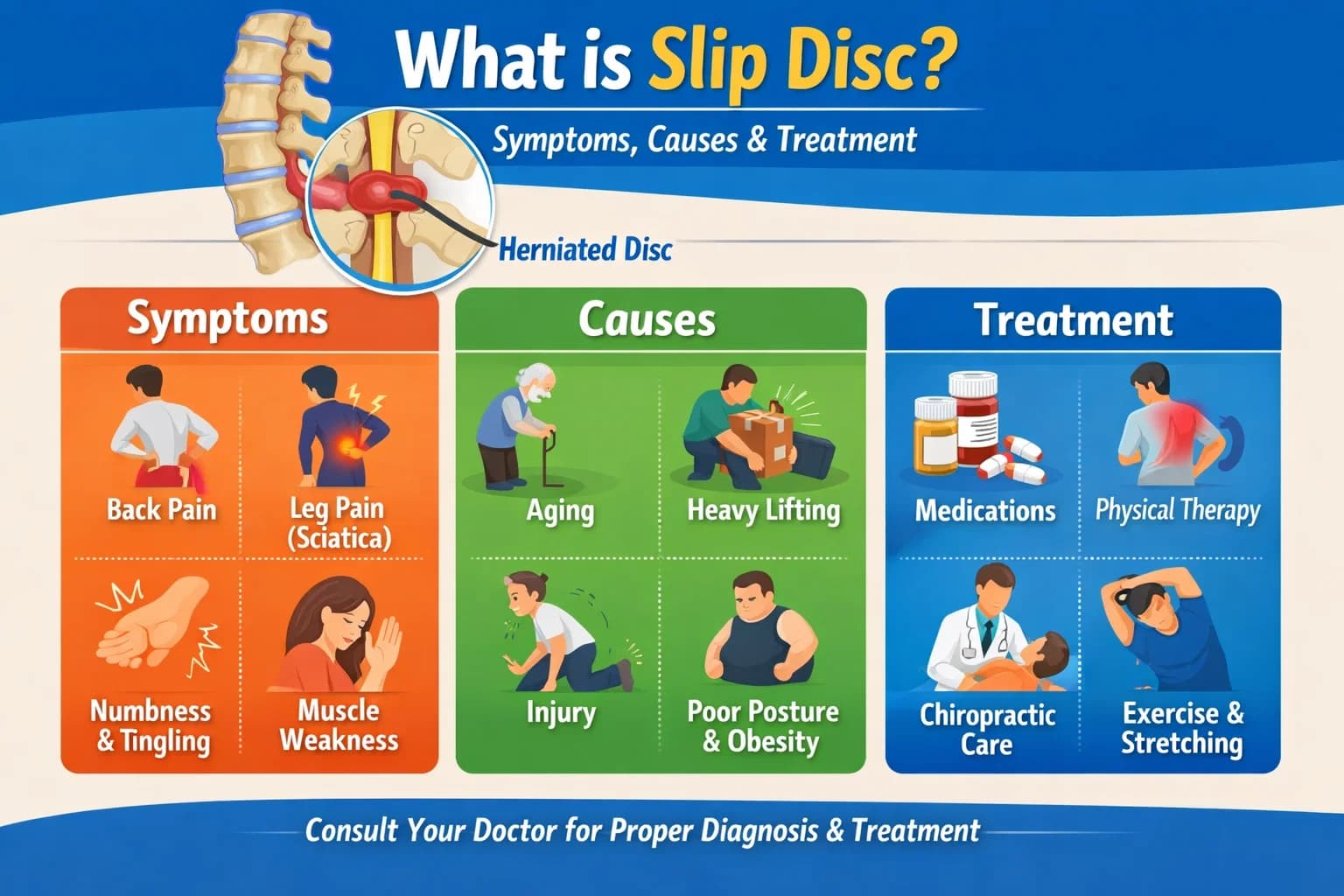
Your spine is made up of bones called vertebrae, cushioned by intervertebral discs. These discs act as shock absorbers. A 'slip disc' occurs when the soft inner portion of the disc leaks out through a tear in the outer shell. This can put pressure on nearby nerves, leading to pain and other neurological symptoms. If you suspect this condition, consulting a spine specialist in Ajmer is crucial for an accurate diagnosis.
Common Symptoms of a Slip Disc
The symptoms depend heavily on where the disc is located. To understand if your discomfort is muscular or spinal, you can read our comparison on back pain vs spine pain. Common signs include:
- Pain in Extremities: If the disc is in the lower back, you may feel intense pain in your buttocks and legs, often identified as sciatica.
- Numbness and Tingling: A 'pins and needles' sensation in the area of the body served by the affected nerves.
- Muscle Weakness: You might find it difficult to lift objects or maintain your balance.
- Worsening Pain: Pain that intensifies with sudden movements, sneezing, or long periods of sitting.
Common Causes and Risk Factors
Several factors contribute to disc herniation, ranging from age-related wear to sudden sports injuries.
| Factor | Description |
|---|---|
| Aging | Natural wear and tear makes discs less flexible and more prone to rupture. |
| Physical Strain | Lifting heavy objects using back muscles instead of legs. |
| Weight | Excess body weight adds stress to the lower spinal discs. |
| Genetics | Some individuals have a hereditary predisposition to disc issues. |
How We Diagnose Slip Disc in Ajmer
At our orthopedic clinic in Ajmer, we use a comprehensive diagnostic approach as detailed in our guide on back pain diagnosis:
- Physical Examination: Checking reflexes, muscle strength, and sensation.
- Imaging: MRI scans are the most effective for seeing exactly where a disc is pressing on a nerve.
- Nerve Tests: EMG or nerve conduction studies to measure electrical impulses.
Effective Treatment Options
We believe in a tiered approach to treatment, focusing first on non-invasive methods.
1. Non-Surgical Treatments
- Physical Therapy: Specific movements designed to minimize pain. Try these healthy joint exercises.
- Medication: Pain relievers and muscle relaxants to manage acute phases.
- Prevention: Learning how to prevent lower back pain through ergonomic adjustments.
2. Advanced Surgical Options
When conservative care isn't enough, we offer modern orthopedic treatments including minimally invasive discectomy to remove the part of the disc causing nerve pressure.
Prevention and Bone Health
Maintaining a strong spine requires proactive care. This includes eating foods that strengthen bones and focusing on bone health after 40. Regular exercise and proper posture are your best defenses against a slip disc.
Emergency Red Flags
Seek emergency orthopedic care immediately if you experience a sudden loss of bladder/bowel control or severe weakness in both legs.
Final Thoughts from Dr. Abhishek Saxena
A slip disc is manageable with the right expertise. Don't let spinal pain limit your quality of life. Whether through therapy or advanced care, we are here to help you get back on your feet.
📞 Phone: +91 86182 43967🌐 Website: https://boneandjoints.in📍 Address: Near Jeevan Jyoti Hospital, Lajpat Nagar, Ramganj, Ajmer 🕒 Clinic Hours: Monday to Saturday, 10 AM to 7 PM 📝 Book Online: Schedule Your Appointment
